


Institute for Telecommunication Sciences / About ITS / 2025 / July Firsts
Bright Stars in the ITS Universe
In July, the Institute for Telecommunication Sciences celebrates two anniversaries: the entry of John Howard Dellinger into the Federal workforce and the publication of the open-source FORTRAN code for the Irregular Terrain Model (ITM).
A Modern Radio Man
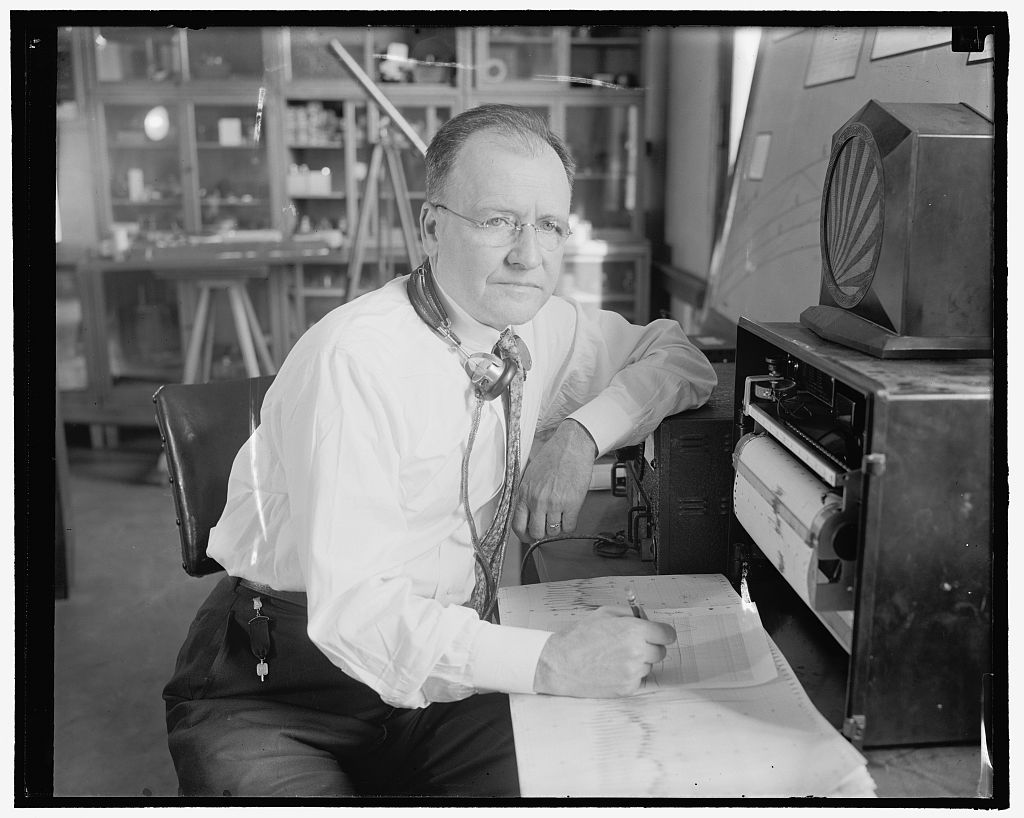
It was in July 1907 that the Bureau of Standards hired a young physicist who would decades hence serve as chief of the Bureau’s Radio Section, co-director of its Interservice Radio Propagation Laboratory, and chief of its Central Radio Propagation Laboratory.
He would also become renowned in the field for his leadership roles in such international organizations as the Institute of Radio Engineers (IRE); the International Union of Scientific Radio Telegraphy (Union Internationale de Radiotélégraphie Scientifique, which in 1928 changed its name to the Union Radioscientifique Internationale (URSI), or the International Union of Radio Science); the International Radio Consultative Committee (Comité Consultatif International pour la Radio), the precursor of the Radiocommunication Sector of the ITU (ITU-R); and the Institute of Electrical and Electronics Engineers (IEEE).
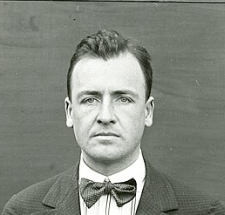
Dellinger’s legacy might be detectable in the Dellinger Effect (or Mögel–Dellinger effect), the name for a sudden ionospheric disturbance that he described, or in the Dellinger crater on the moon (Crater 293), which was named in his honor. But how many people know that J.H. Dellinger is the man who helped modernize the global lexicon by midwifing the terms radio, kilocycle, and ionosphere?
As he recounted in a 1960 banquet address of an URSI-IRE meeting in Boulder, Colorado, it was by virtue of his position as “head of the radio work” of the U.S. National Bureau of Standards, that he was able to wield considerable influence to usher in “the change in common practice from ‘wireless’ to ‘radio’ [which] came in about 1912 to 1916, from ‘wavelength to ‘frequency’ [which came in] about 1916 to 1920, and from ‘Kennelly-Heaviside layer’ to ‘ionosphere’ [which came] in about 1932.”
Among the 140 scientific texts — articles, books, and treatises — Mr. or Dr. Dellinger authored or co-authored was the little-known NBS Circular No. 385, Classification of Radio Subjects: An Extension of the Dewey Decimal System, which the Government Printing Office issued October 16, 1930 (price 10 cents) to supersede the original 1923 Circular. In the Circular co-prepared by Dellinger and his Radio Section colleague Charles Byron Jolliffe, the 489 reference numbers correlated with 56 classes that testify to the burgeoning amount of radio literature produced, collected, and filed to meet the needs of Bureau scientists and engineers in the first decades of the 20th century.
Dellinger viewed radio as “the very symbol of progress,” both in terms of science and business, as he wrote in “The Great Opportunity”, a guest editorial composed for the June 1948 Proceedings of the I.R.E. Moreover, he understood “the vast field of radio and electronics” as one with a unique potentiality “to contribute to world friendliness, the prerequisite of world peace.”
He declared himself privileged to work in a field that promotes international understanding, and he understood the importance of establishing reliable standards for radio propagation modeling. He knew that dependable and lasting radio propagation models would prove central to promoting international cooperation.
It was an open source computer program released in 1968, though, that would enable a ground-breaking RF propagation model to take root and branch out across the decades ahead.
An Open-source Computer Program
July 1968
When the ESSA Research Laboratories (ERL) of the National Bureau of Standards (NBS) published ESSA Technical Report ERL 79-ITS 67, “Prediction of Tropospheric Radio Transmission Loss Over Irregular Terrain: A Computer Method – 1968,” the propagation algorithm could be implemented on a slide rule.
The authors, Anita G. Longley and Philip L. Rice, both working in ESSA’s Tropospheric Telecommunications Laboratory, had been two of the four authors for the final 1967 revision of NBS report Technical Note 101, “Transmission Loss Predictions for Tropospheric Communication Circuits".
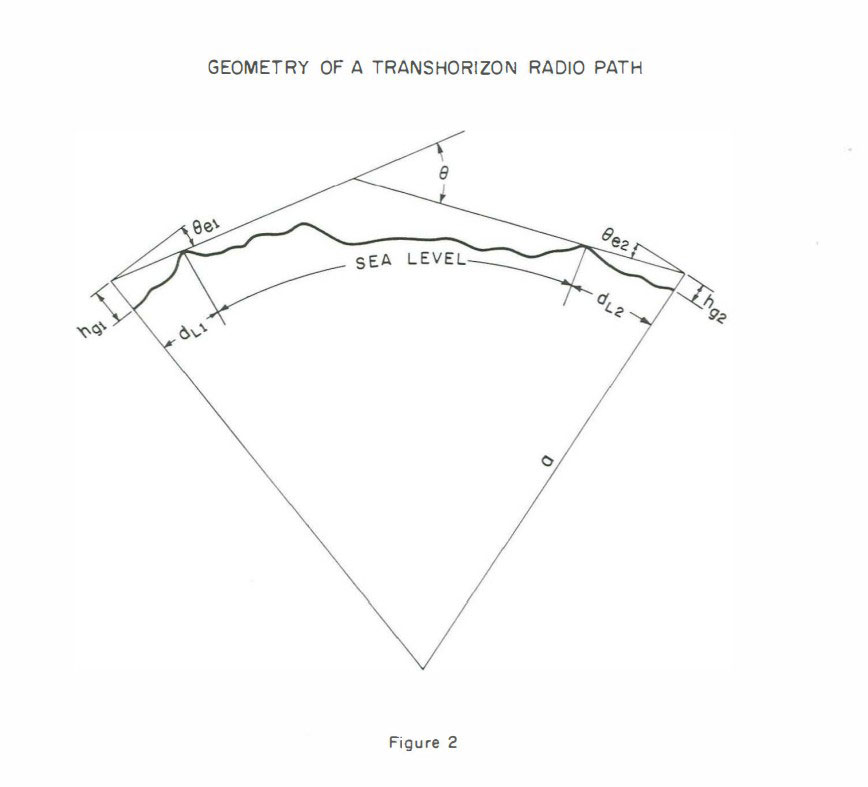
The model that Rice, Longley, and their colleagues developed and then made available for use by others as a FORTRAN program is now known as the Irregular Terrain Model (ITM), or the Longley-Rice Model. It was designed to be broadly applicable to frequencies from 20 MHz to 20 GHz and over distances between 1 and 2000 km. Significantly, it also was designed to take into account the impacts on radio propagation of terrain, such as mountains and valleys, and climate conditions.
The model was validated by an extensive collection of measured data that had accumulated at the NBS since the earliest decades of the 20th century. By comparing theoretical calculations to ground-truth measurement data, the researchers could develop and incorporate mathematical algorithms that took into account a wide variety of climates, terrains, and ground conditions. An important feature of Tech Note 101, as it became known, was the twin presentation of empirical graphs from which propagation distances could be interpolated, and calculations, which were adaptable to computer programming.
In 1968, Anita Longley and Philip Rice followed up with the publication of Technical Report ERL 79-ITS 67, “Prediction of Tropospheric Radio Transmission Loss Over Irregular Terrain: A Computer Method-1968”. This report, published by the Institute for Telecommunication Sciences when it was housed within a different component of the Department of Commerce, presented one of the first computerized implementations of a radio propagation model. The FORTRAN code was printed in full—i.e., open sourced—with schematics of the subroutines in Section 3-5 of Annex 3 in ERL 79-ITS 67.
The ITM remains integral to certain Federal Communications Commission (FCC) rulemakings. And portions of ITM still provide the foundation for a number of the P (Propagation) series of ITU-R international standards. Recommendation ITU-R P.2170 (09/2025), Methods and models for predicting lunar radio-wave propagation characteristics, builds on well-established electromagnetic theory and methodologies developed by ITS for the Irregular Terrain Model (ITM), and Longley and Rice’s work serves as the basis of the Irregular Lunar Model (ILM). The ILM predicts terrestrial radio-wave propagation for frequencies between 20 MHz and 20 GHz.